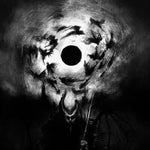

Sascha Schneider, Eine Vision (A Vision), 1897. Engraving by J. J. Weber after Schneider. Public domain. Courtesy Wikimedia Commons.
German Symbolist artist Sascha Schneider (1870–1927) created a strange visual world built from monumental bodies, spiritual conflict, fear and transformation. Masterfully working across painting, drawing, sculpture and illustration, Schneider developed an intensely allegorical style where the human figure became a symbol for psychological and supernatural forces. His art frequently places idealized bodies against oppressive shadows, enormous figures or unseen forces, creating images that feel less like conventional stories than visions pulled from ancient myth or nightmare. One of his best-known early works, Das Gefühl der Abhängigkeit (The Feeling of Dependence, 1894), shows a vulnerable human figure confronted by an immense looming creature—a simple but disturbing image of helplessness, domination and forces larger than the individual. The work became one of Schneider’s most recognized compositions and established many of the themes that would continue throughout his career.

Sascha Schneider, Judas Iscariot, 1908. Painting. Collection/location unknown. Public domain. Courtesy Wikimedia Commons.

Sascha Schneider, Mammon and His Slave. Courtesy Art Renewal Center.
Source: https://www.artrenewal.org/artworks/sascha-schneider/mammon-and-his-slave/85718
Schneider’s darker work repeatedly circles around Satan, judgment, death, spiritual captivity and the conflict between light and darkness. In Hypnose (Hypnosis, 1904), psychological control itself becomes the subject, while works including Christus in der Hölle (Christ in Hell) and Satan und Ischariot transform Christian imagery into severe Symbolist allegories. In the latter, Satan and Judas appear not as triumphant embodiments of evil but as defeated, chained figures beneath an imposing angelic presence holding the cross and sword. Schneider was fascinated by these opposing forces good and evil, freedom and submission, illumination and darkness and contemporary writing on his work repeatedly described this struggle as central to his imagery.
 Sascha Schneider, Hypnosis, 1904. Symbolist painting. Public domain. Image via Obelisk Art History.

Sascha Schneider, Triumph of Darkness. Image via Art Renewal Center.

Sascha Schneider, Titelbild von Karl Mays Und Friede auf Erden. Image via Art Renewal Center.
This symbolic approach became especially visible through Schneider’s friendship with German writer Karl May, whom he met in 1903. Beginning the following year, Schneider created a series of unusual covers for May’s books that abandoned straightforward adventure illustration in favor of mystical figures, angels, chained bodies, crosses and personifications of spiritual struggle. The Karl May Museum describes these images as allegorical interpretations of the underlying ideas within May’s writing rather than literal scenes from the stories. Seen today, Schneider’s work occupies an unusual territory between German Symbolism, religious art, erotic classicism and what we might now recognize as dark or occult visual culture. His demons and supernatural figures are rarely simple monsters. They represent internal states—fear, desire, dependence, guilt and the continual struggle between the physical body and an unseen world beyond it.
 Sascha Schneider, Um die Freiheit (For Freedom). Image via Creazilla.

Sascha Schneider (1870–1927). German painter, sculptor and illustrator. Image/reference via Art Renewal Center. Art Renewal Center

Monster Brains. “Sascha Schneider (1870–1927).” Published June 2017.
Wikimedia Commons — Sascha Schneider
Large collection of Schneider paintings, drawings, sculpture, book-cover work, and public-domain images.
https://commons.wikimedia.org/wiki/Category:Sascha_Schneider
Art Renewal Center — Sascha Schneider
A focused image collection with individual artwork pages and basic work information.
https://www.artrenewal.org/artists/sascha-schneider/8079
Karl May Museum — Karl May Collection
Useful for Schneider’s work connected to Karl May, including paintings, prints, and related archival material.
https://www.karl-may-museum.de/en/collections/karl-may/karl-may-collection/
Deutsche Digitale Bibliothek
Institutional archive with digitized works, records, and museum material related to Schneider.
https://www.deutsche-digitale-bibliothek.de/