


A Shoggoth — artwork inspired by H. P. Lovecraft's At the Mountains of Madness. Image and artwork via Nottsuo .
H. P. Lovecraft's Gods, Monsters and Cosmic Horror
H. P. Lovecraft created one of the most influential fictional universes in horror: a world of ancient gods, impossible creatures, forgotten civilizations, and forces so vast that humanity barely registers within them.
His stories helped define what is now called cosmic horror: horror rooted not simply in monsters, but in the realization that the universe is older, stranger, and far less concerned with humanity than we would like to believe.
Creatures and entities such as Yog-Sothoth, Shoggoths, Azathoth, Nyarlathotep, Dagon, and Cthulhu have inspired generations of artists. Many are difficult to visualize because Lovecraft intentionally described them as shifting, formless, incomprehensible, or beyond normal human perception.
This collection explores several of Lovecraft's most memorable gods and monsters through the work of contemporary illustrators and concept artists.
“Now all my tales are based on the fundamental premise that common human laws and interests and emotions have no validity or significance in the vast cosmos-at-large.”
— H. P. Lovecraft
Yog-Sothoth
Yog-Sothoth is one of the great cosmic entities associated with Lovecraft's mythos. Existing beyond ordinary time and space, Yog-Sothoth is linked with forbidden knowledge, thresholds, and access to realities beyond the human world.
Lovecraft's descriptions leave considerable room for interpretation, which is why artists have represented Yog-Sothoth in radically different ways: as glowing spheres, immense cosmic structures, or abstract forms that seem to exist outside conventional physical reality.

Yog-Sothoth — artwork via Satibalzane .

Yog-Sothoth — image via Manzanedo .

Yog-Sothoth — artwork by Jason Engle .
Shoggoth
Shoggoths are among Lovecraft's most disturbing creations. In At the Mountains of Madness, they are described as enormous, shape-shifting masses of protoplasm capable of forming temporary eyes, limbs, and other structures as needed.
They were created as servants by the Elder Things, but some eventually developed greater independence and rebelled against their creators. Their constantly changing form makes them a perfect expression of Lovecraft's fascination with organisms that resist ordinary biological categories.
“It was a terrible, indescribable thing vaster than any subway train—a shapeless congeries of protoplasmic bubbles...”
— H. P. Lovecraft, At the Mountains of Madness

A Shoggoth — artwork by Nottsuo , inspired by At the Mountains of Madness.

Shoggoth by Manzanedo .

Shoggoth inspired by Lovecraft Country , where the creature takes on a more physically defined monster form. Artwork via J. Meyers .

Further reading: Lovecraft Country: Bringing the Shoggoths to Life and Bloody Disgusting .
Dagon
Dagon is one of the names most closely associated with Lovecraft's aquatic horror. The figure appears in the 1917 story Dagon and later became connected with the Deep Ones and the strange maritime mythology surrounding The Shadow over Innsmouth.
Across later interpretations of the Cthulhu Mythos, Dagon is often imagined as a gigantic, ancient sea deity associated with underwater civilizations, forbidden worship, and humanity's fear of what may exist beneath the ocean.

Dagon — artwork associated with Dagon: The Necronomicon Gamebook , illustrated by Alberto Dal Lago and Jacopo Schiavo.
Azathoth
Azathoth is one of the most mysterious entities associated with Lovecraft's fiction. Often referred to as the “Blind Idiot God,” Azathoth exists at the center of cosmic chaos, surrounded by strange music and incomprehensible forces.
Lovecraft never provided a single definitive visual description, leaving artists free to interpret Azathoth as an immense cosmic mass, an impossible living void, or a chaotic presence beyond ordinary form.

Azathoth — artwork by Walter Brocca .

Azathoth — image via Xeeming .
Nyarlathotep
Nyarlathotep is one of Lovecraft's most unusual entities because, unlike many of the distant and indifferent cosmic beings, Nyarlathotep actively interacts with humanity.
Known as the “Crawling Chaos,” Nyarlathotep appears in many forms and often serves as a messenger or intermediary for greater cosmic powers. The character is associated with deception, manipulation, madness, and the collapse of ordinary reality.
The idea of a being with countless forms has made Nyarlathotep especially appealing to artists, who have imagined the entity as everything from a humanoid occult figure to an enormous monstrous creature.
“And where Nyarlathotep went, rest vanished, for the small hours were rent with the screams of nightmare.”
— H. P. Lovecraft

Nyarlathotep — artwork by Walter Brocca .

Nyarlathotep — artwork by Jason Engle .

Nyarlathotep — artwork by Loïc Muzy .
Nyarlathotep creature sculpting in ZBrush by Yang Gao .

Nyarlathotep — image via Jeff Grimal .
Cthulhu
Cthulhu is Lovecraft's most famous creation and the figure most closely associated with the wider Cthulhu Mythos.
The entity appears in The Call of Cthulhu, published in Weird Tales in 1928. Lovecraft describes an immense creature combining vaguely humanoid, cephalopod, and dragon-like features, sleeping beneath the ocean in the sunken city of R'lyeh.
Cthulhu became an enduring symbol of cosmic horror because the creature is not simply a monster to be defeated. Its existence represents a universe filled with ancient powers beyond human understanding, where sanity itself can become fragile when confronted with the truth.

H. P. Lovecraft's original sketch of Cthulhu. Image via Lovecraft Wiki .

Cthulhu — digital painting by Bram Sels . See more of the artist's work on ArtStation .

Cthulhu — image via Kaenkodi on ArtStation .
Who Was H. P. Lovecraft?
Howard Phillips Lovecraft was an American writer of weird fiction and horror whose work became enormously influential after his death. His stories combined supernatural horror with astronomy, ancient history, invented mythology, dreams, and the fear of realities beyond human comprehension.
Rather than centering horror on traditional ghosts or demons, Lovecraft often imagined humanity confronting beings and forces so ancient and immense that normal concepts of morality, religion, and importance became meaningless.
That worldview helped shape modern cosmic horror and influenced generations of writers, filmmakers, game designers, musicians, illustrators, and visual artists. The imagery surrounding the Cthulhu Mythos has expanded far beyond Lovecraft's original stories and continues to evolve through new interpretations.

Painting of H. P. Lovecraft by Jeff Grimal. View the artwork .
H. P. Lovecraft Art & Mythos Resources
Explore more of Lovecraft's fiction, creatures, cosmic horror, and the artists inspired by the Cthulhu Mythos.
- H. P. Lovecraft Wiki
- Necronomicon: The Diary of Verceto by Walter Brocca
- Lovecraft-Inspired Concept Art by Jason Engle
- Lovecraft Country: Bringing the Shoggoths to Life
- The Complete Cthulhu Mythos Tales
- A Lovecraftian Bestiary
- r/Lovecraft
- Lovecraft Creatures Collected by Dark Art & Craft
Lovecraft's creatures remain a powerful source of inspiration for dark art, horror illustration, surrealism, creature design, and modern visual culture.
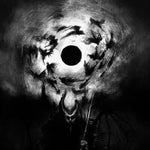
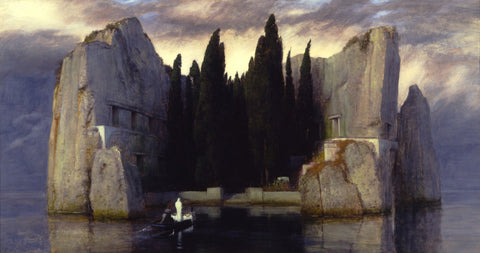
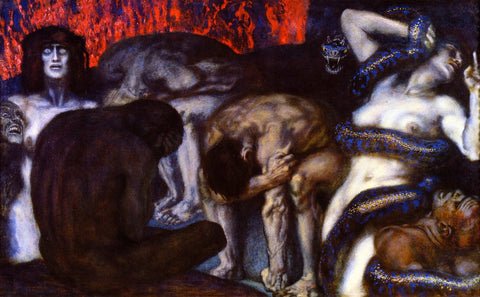
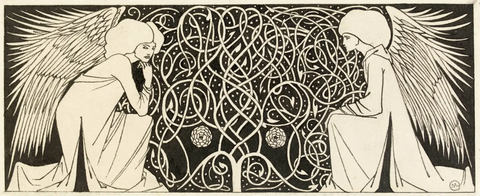
In episode 5 of cabinets of curiosities, pick man’s model. A goat like creature is painted an im trying to figure of which Lovecraft God it is
I absolutely love you guys work! The art work is amazing!