


The Bride, Stephen Gammell. Scholastic/HarperCollins. Image via PopSugar .
The Illustrations of Scary Stories to Tell in the Dark
Stephen Gammell is best known for the nightmarish illustrations he created for Alvin Schwartz’s Scary Stories to Tell in the Dark books. Built from folklore, ghost stories, urban legends, and traditional tales, the stories were unsettling enough on their own. Gammell’s images made them unforgettable.
His dripping figures, distorted faces, tangled shadows, and dreamlike landscapes gave the books a visual identity unlike almost anything else aimed at young readers. For many artists and horror fans, Gammell’s work became an early introduction to macabre illustration and dark art.
The combination of Schwartz’s stories and Gammell’s illustrations became deeply embedded in horror culture, especially for readers who first encountered the books in school libraries and bookstores during the 1980s and 1990s.

Scary Stories to Tell in the Dark book cover. Image via Reddit .

Harold
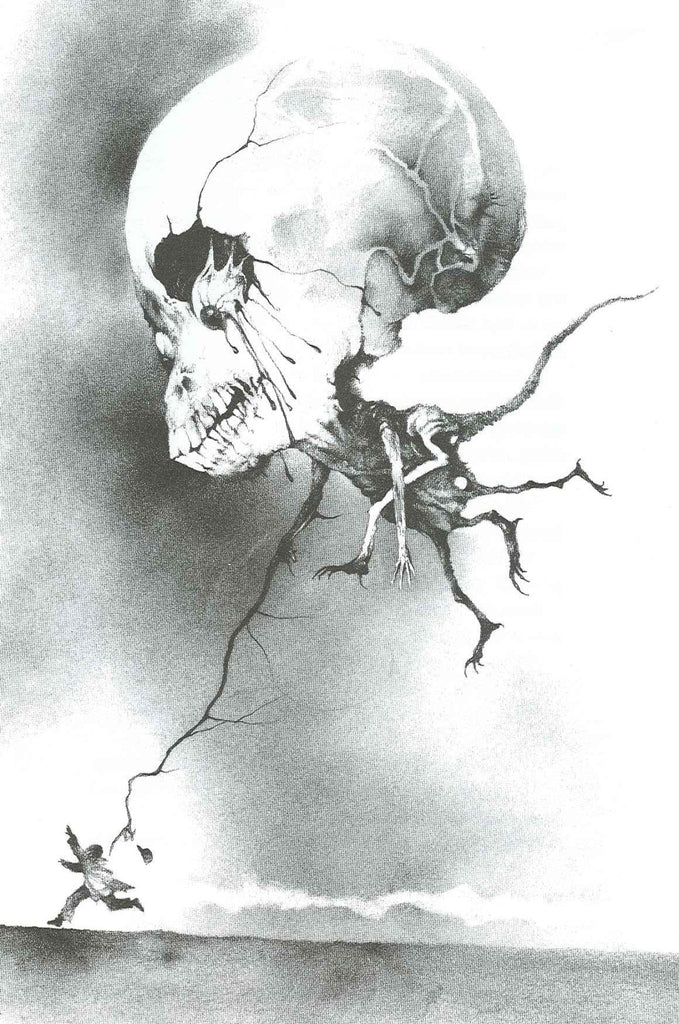
Is Something Wrong, Stephen Gammell. Scholastic/HarperCollins. Image via PopSugar .


Image via Bloody Disgusting .

Somebody Fell From Aloft
Who Is Stephen Gammell?
Stephen Gammell is an American illustrator whose work extends far beyond the Scary Stories books. His illustrations often combine loose washes, energetic linework, blurred forms, and areas that seem to dissolve into smoke, shadow, or decay.
That looseness is part of what makes the images so disturbing. Rather than presenting monsters with clean outlines and obvious boundaries, Gammell often allows faces and bodies to emerge from stains, darkness, and chaotic textures. The result feels closer to a half-remembered nightmare than a conventional horror illustration.
His work demonstrates how suggestion can be more unsettling than explicit detail. A distorted expression, an empty eye socket, or a figure disappearing into the background can leave far more room for the viewer’s imagination.
When Gammell’s Art Was Replaced
In 2011, a new edition of the Scary Stories to Tell in the Dark books replaced Gammell’s original illustrations with artwork by Brett Helquist. For longtime readers, the change was immediately noticeable.
Much of the lasting identity of the series had become inseparable from Gammell’s illustrations, and many fans strongly preferred the original artwork. Later editions once again made Gammell’s illustrations available, preserving the visual version of the books remembered by generations of readers.

The Haunted House, Stephen Gammell; Scholastic/HarperCollins.

The Girl Who Stood on a Grave, Stephen Gammell; Scholastic/HarperCollins.

Oh, Susannah!, drawing by Stephen Gammell for the Scary Stories books. Image via ArtsEditor .
The Bride — reading and artwork.
Why the Illustrations Were So Controversial
The Scary Stories to Tell in the Dark series became one of the most frequently challenged children’s book series of its era. Critics objected to the violence, frightening subject matter, and disturbing imagery, while generations of readers were fascinated by exactly those qualities.
Gammell’s illustrations played a major role in that reaction. The stories might describe ghosts, corpses, monsters, and supernatural encounters, but his artwork gave those ideas physical form in ways that could be grotesque, surreal, and genuinely frightening.
For Dark Art & Craft, that intensity is precisely what makes the illustrations so memorable. They occupy a rare space between children’s illustration, folklore, surrealism, and horror art.
The original trilogy consists of Scary Stories to Tell in the Dark (1981), More Scary Stories to Tell in the Dark (1984), and Scary Stories 3: More Tales to Chill Your Bones (1991).

One Sunday Morning

The Church
Stephen Gammell Resources & Further Reading
Explore more about Stephen Gammell, the original Scary Stories to Tell in the Dark illustrations, and the history surrounding the books.
- Scary Stories to Tell in the Dark — Series Overview
- Beyond Scary Stories: The Other Macabre Works of Stephen Gammell
- The Art Replacements from Scary Stories to Tell in the Dark
- Contents of a Nightmare: The Artwork of Stephen Gammell
- The Art of Stephen Gammell
Gammell’s work remains a lasting influence on horror illustration, dark art, and generations of readers who discovered the macabre through these books.
These books are masterpieces. i never will see the issue with them, but thats because i have a very dark mind and absolutely loved this stuff as a kid, and still love it as a 46 year old adult. as a kid, some of these drawings and stories really scared me, but at the same time inspired me to write my own short horror stories (all of which u couldnt recognize as being inspired from any of these) but these stories gave me ideas to write my own dark stuff (and very disturbing). Thank you Alvin Schwartz and Stephen Gammell for these books.
what a crazy article! Post more pics plks
My favorite modern illustrator/artist by far. I know the first time I read Scary Stoies to tell in the Dark when I was ten years old, I know they were something special
Where can I find prints of Gammell’s art suitable for framing?
Wow