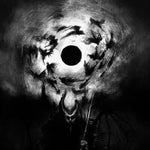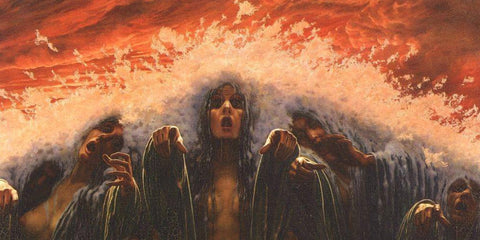
Alfred Kubin (1877–1959) stands among the rare artists whose work doesn’t simply depict dark visions — it embodies them through extraordinary draftsmanship and traditional technique. Born in the Austro-Hungarian town of Leitmeritz, Kubin’s life was shaped by trauma, psychological turmoil, and an unflinching gaze into the depths of the human psyche. His personal struggles — including a suicide attempt in 1896 and a nervous breakdown shortly thereafter — didn’t silence his creativity; they fueled it, driving him toward a lifetime of haunting, otherworldly imagery. Wikipedia

The Swamp, 1903 Source
Kubin’s work is rooted in classic artisan skills — ink, wash, pen, and traditional print techniques — yet these methods only sharpened the eerie potency of his visions. Early in his artistic training in Munich, he was transformed by the graphic works of Odilon Redon, Max Klinger, James Ensor, and Francisco Goya; these influences guided Kubin toward a meticulously crafted aesthetic that merged Symbolism with a proto-Expressionist fervor. Encyclopedia Britannica+1

A Dream Visits Us Every Night (1900) Source wikipedia

Alfred Kubin, The Idol, 1903
What sets Kubin apart in the canon of dark art isn’t merely his subject matter, but the disciplined skill with which he rendered it. His lines — often described as “spidery” yet deliberate — conjure dreamscapes filled with skeletal figures, grotesque beasts, phantasmal creepy gatherings, and ominous horizons that seem born from a fevered subconscious rather than the our everyday world. Wikipedia
 Dolmen (c. 1900–1902); Indian ink, wash, spray paint, and white body color; Albertina, Vienna Source Wikipedia

Hour of Death, 1903 by Alfred Kubin, Source

Alfred Kubin - The Best Doctor - 1901
Kubin’s graphic works reached a wider audience through early exhibitions in Berlin and the publication of portfolios that reproduced his prints, establishing him as a leading voice in European art circles at the turn of the century. He also illustrated books by literary peers like Edgar Allan Poe, Fyodor Dostoyevsky, and Oscar Wilde — selections that echoed his own fascination with the macabre and uncanny. Encyclopedia Britannica+1

Alfred Kubin, Epidemic (1900).
A colossal skeleton looms over the town, uncorking a sack of pestilence and unleashing death upon the streets below. Source

The Past Forgotten Swallowed (1901) or "he Past (Forgotten – Sunken)" from 1901

Black Mass (1905) Source Wikipedia, Cloaked figures moving through oppressive darkness.
Though he later retreated from the avant-garde art world into the seclusion of an Austrian manor in Zwickledt, Kubin’s influence endured. His uncanny visions, rendered through time-honored craft and an unwavering commitment to his internal world, would later be condemned by Nazi authorities as entartete Kunst — “degenerate art” — a stark testament to how his work challenged comfortable aesthetics and societal norms. Wikipedia

Angst (1903) source Wikipedia A struggle against undefined horrors, rendered in haunting contrast.

Alfred Kubin, Serpent God, 1902 completed in 1903 Source
In Kubin’s universe, darkness is not merely thematic — it is structural, born through traditional skill and executed with a precision that transforms nightmare into art. His legacy persists as a cornerstone of dark symbolism and a masterclass in how craft can bring the rejected, the feared, and the subconscious into horrifying clarity.

Alfred Kubin, Thou Shalt Not Kill, 1900-1901 Source
Alfred Kubin and German Expressionism
Although Kubin developed an artistic language that remained unmistakably his own, his work occupied an important position between European Symbolism and early German Expressionism. He was connected with the Munich avant-garde surrounding Wassily Kandinsky, Franz Marc, and the artists of Der Blaue Reiter, or the Blue Rider. Where many members of that circle explored color, abstraction, and spiritual experience, Kubin contributed a darker world of ink drawings, distorted bodies, supernatural creatures, and dream psychology.
Kubin’s presence within this modernist circle demonstrates that early Expressionism was not defined by one visual style. His feverish black-and-white drawings shared the movement’s interest in subjective experience, emotional intensity, and realities hidden beneath outward appearances. Rather than faithfully illustrating the visible world, Alfred Kubin used art to expose fear, desire, death, violence, and the unstable workings of the subconscious.
 Into the Unknown – 1900


Alfred Kubin - The Witch - ca. 1900
The Technique Behind Kubin’s Dark Drawings
Much of the disturbing power of Alfred Kubin’s art comes from his handling of pen, ink, and wash. Fine, nervous lines establish skeletal figures and impossible creatures, while pools of diluted ink create fog, shadow, and uncertain depth. In works such as Spook, Kubin combined black and brown ink with translucent washes, allowing figures to appear as though they were emerging from—or disappearing into—the paper itself.
 Alfred Kubin - Death as a Horseman - 1906
This restrained palette made Kubin’s drawings feel less like conventional illustrations and more like recovered visions from a dream. Empty spaces become threatening, distant landscapes feel diseased, and vaguely defined forms encourage viewers to complete the horror with their own imagination. His mastery of traditional drawing materials proves that dark art does not require excessive detail or color; suggestion, atmosphere, and carefully controlled ambiguity can be far more unsettling.

The Last King – 1902

Des Menschen Schicksal III (The Fate Of Mankind III) Source
Alfred Kubin’s Influence on Surrealism and Contemporary Dark Art
Kubin created many of his most haunting works before Surrealism became an organized movement, yet his exploration of dreams, hallucination, erotic anxiety, and subconscious imagery strongly anticipated its concerns. His creatures rarely function as simple monsters. They appear instead as psychological symbols—embodiments of mortality, repression, sickness, sexuality, authority, and uncontrollable natural forces.
That approach continues to resonate with contemporary dark artists, horror illustrators, tattoo artists, and creators of surreal or occult imagery. Kubin demonstrated that nightmare art could be both technically sophisticated and deeply personal. More than a century later, his drawings still feel strangely modern because they do not merely show frightening events; they recreate the unstable emotional logic of fear itself.

Zurück zum Schoss (Back to the Womb) - Alfred Kubin