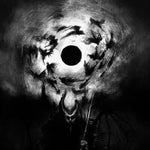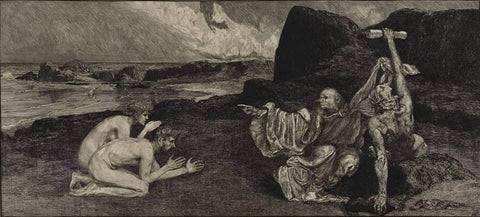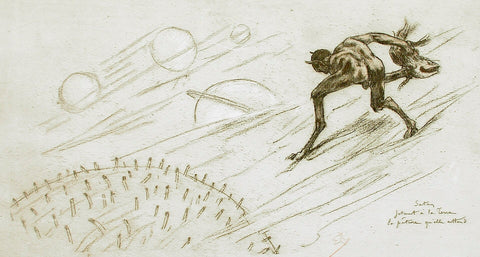
Some artists construct nightmares from recognizable symbols: skulls, demons, ruined landscapes or scenes of supernatural horror. Sibylle Ruppert created something less stable. In her drawings, the nightmare begins within the body itself.
Human figures twist into animals, machines, insects and unidentifiable organic structures. Muscles appear stretched beyond their limits. Limbs multiply, merge and disappear. What first resembles an erotic embrace can become an act of violence, while an apparently monstrous form may reveal traces of vulnerability and beauty.
Working primarily in charcoal, crayon, painting and collage, Ruppert developed a particularly intense form of dark surrealism. Her art occupies an uneasy territory between desire and revulsion, elegance and brutality, creation and bodily collapse.
Although she remained relatively obscure for much of her career, renewed exhibitions have brought attention to an artist whose work deserves to be discussed alongside the darker visions of Hans Bellmer, H.R. Giger and the European Surrealists.

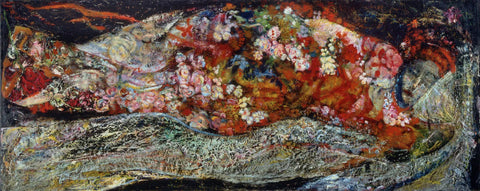
1976 The Recumbant Source
Who Was Sibylle Ruppert?
Sibylle Ruppert was born in Frankfurt, Germany, in 1942 and died in Paris in 2011. Accounts of her life frequently begin with the dramatic circumstances of her birth: she was reportedly born during an air raid and taken from the maternity ward into a bomb shelter. This story became central to later biographies of the artist, although contemporary writers have noted that much of the commonly repeated biographical material about Ruppert originated from a small number of earlier sources.
Ruppert studied at Frankfurt’s Städelschule and spent time in Paris and New York before eventually settling in Paris in 1976. There, she pursued her work as a full-time artist and produced many of the large-format charcoal drawings for which she is now best known.

Her early interest in movement was also significant. Ruppert originally considered a life in dance, and the influence of choreography remained visible throughout her art. Her figures rarely appear static. They bend, strain, collide and spiral through space as though caught in a violent performance.
That sense of movement separates Ruppert’s work from conventional fantasy illustration. Her images do not simply depict monsters. They show bodies actively becoming monstrous.

Ma Soeur mon Epouse, 1975 Source

La Fontaine, 1977 Source
The Body as a Site of Transformation
The body is the central subject of Ruppert’s art, but it is never treated as a fixed or dependable structure.
In her drawings, flesh behaves like an unstable material. A torso may open into a cavernous interior. An arm can become a claw, branch or mechanical extension. Human and animal anatomy flow into one another until it becomes impossible to determine where one organism ends and another begins.
This process of transformation is sometimes erotic, but it is rarely comforting. Ruppert’s bodies struggle against one another, penetrate one another and appear trapped inside larger structures. Pleasure and pain are presented as closely related forces.

Her imagery can evoke birth, sexual violence, death and physical mutation without settling into a single interpretation. The result is an art of permanent uncertainty. Viewers may recognize individual anatomical details, but the complete organism remains impossible to classify.
This ambiguity is part of what makes Ruppert’s work so disturbing. Her creatures are not invaders from an alien world. They seem to have developed from the hidden potential of the human body.

Le sign / zeppelin, 1978
Charcoal, Crayon and Monumental Darkness
Ruppert’s choice of materials helped create the oppressive atmosphere of her work.
Many of her best-known drawings were produced with charcoal and crayon on large sheets of paper. The limited palette allowed her to build forms through dense shadows, soft transitions and sharply illuminated surfaces. Brown, black and gray tones give many images the appearance of aged photographs, scorched flesh or objects emerging from darkness.
Works such as La Bible du Mal—The Bible of Evil—demonstrate the scale of her ambition. Completed in 1978, the multi-panel drawing measures more than three-and-a-half meters across. Rather than presenting evil as a conventional devil or religious symbol, Ruppert constructs an overwhelming environment of bodies, textures and transformations.
The precision of her draftsmanship is crucial. However grotesque the subject becomes, the execution remains controlled. Skin, hair, bone, fabric and mechanical surfaces are carefully rendered. The technical elegance draws the viewer closer before the full violence of the composition becomes clear.
H.R. Giger, who supported Ruppert’s work and helped preserve awareness of it, praised this balance. Her imagery could be extreme without descending into cheap gore or conventional fantasy illustration.

Literature, Eroticism and the Art of Excess
Ruppert drew inspiration from writers who explored cruelty, transgression and the darker limits of human desire. Exhibitions and catalogues have connected her work particularly closely with the Marquis de Sade, the Comte de Lautréamont and Georges Bataille. She also engaged with psychoanalysis and the expressive possibilities of dance.
These influences help explain why her art does not present violence merely as spectacle. Violence becomes a means of exposing unstable identities and forbidden desires.
The influence of Lautréamont is particularly appropriate. His nineteenth-century prose poem Les Chants de Maldoror is filled with blasphemy, metamorphosis, cruelty and strange encounters between human and animal life. Ruppert produced drawings associated with Lautréamont’s writing, translating its literary atmosphere into elaborate biological and psychological forms.

Sade provided another important point of reference. Ruppert’s work repeatedly confronts power, domination and the transformation of the body into an object. Yet her art cannot be reduced to an illustration of Sadean cruelty. The figures also appear trapped by the worlds they inhabit, making the relationship between aggressor and victim difficult to separate.
The influence of Bataille can be felt in Ruppert’s refusal to preserve conventional boundaries. Human and animal, sacred and obscene, beautiful and repulsive continually collapse into one another.

Escargot / Cortège, 1978
Sibylle Ruppert and H.R. Giger
Comparisons between Sibylle Ruppert and H.R. Giger are unavoidable. Both artists developed dark, highly detailed worlds in which human bodies merge with unfamiliar structures. They were also friends, and Giger became an important supporter of Ruppert’s work.
Their careers, however, followed very different paths.
Giger’s biomechanical imagery reached an enormous international audience, especially following his work on the 1979 film Alien. Ruppert never achieved comparable recognition. She gradually withdrew from exhibitions and lived increasingly outside the attention of the commercial art world.
The similarities between their work are real, but so are the differences. Giger’s figures often appear fused with polished machines, industrial environments and alien technologies. Ruppert’s transformations tend to remain more organic, intimate and psychologically unstable. Even when mechanical forms appear, her images retain the feeling of flesh undergoing an internal crisis.
The H.R. Giger Museum presented an exhibition of works from a private Swiss collection in 2010, shortly before Ruppert’s death. The exhibition and its accompanying catalogue played an important role in preserving and reintroducing her work.

An Artist Rediscovered
For years, reliable information and substantial reproductions of Ruppert’s art were difficult to find. Her obscurity was not caused by a lack of originality. It was partly the result of her withdrawal from public life and the limited institutional support her work received during her lifetime.
That situation has begun to change.
The exhibition The Bible of Evil at Blue Velvet Projects presented drawings, paintings, collages and archival material associated with her life and work. Project Native Informant later organized Frenzy of the Visible, described as Ruppert’s first solo exhibition in the United Kingdom. The Kunsthalle Giessen also presented Dancing in Darkness in 2023, contributing to the wider reassessment of her career.
These exhibitions have revealed an artist whose work feels unusually relevant to contemporary dark art.
Ruppert investigated bodily transformation decades before mutated anatomy and biomechanical forms became familiar elements of horror, tattooing, album artwork and digital culture. Her images also resist the clean divisions often used to market art. They are simultaneously Surrealist, erotic, grotesque, literary and intensely personal.
She was not an outsider artist in the strict sense. Ruppert received formal artistic training and participated in exhibitions. Yet she remained an outsider to the larger story that was written around postwar European art. Her recent rediscovery demonstrates how easily a singular body of work can disappear when it does not fit the dominant categories of its time.

Why Sibylle Ruppert Matters
Sibylle Ruppert created images that are difficult to absorb and even more difficult to forget.
Her art refuses to treat the human body as complete, dignified or protected. Flesh can be transformed into architecture. Desire can become imprisonment. Beauty can develop from something violent, while horror can contain unexpected tenderness.
That instability places Ruppert among the most compelling artists working on the darker edges of Surrealism.
Her drawings are not merely illustrations of nightmares. They suggest that identity itself is a temporary arrangement—and that beneath the familiar surface of the body, other forms are waiting to emerge.
Resources and Further Reading
-
Sibylle Ruppert at Blue Velvet Projects
Includes a concise biography and reproductions of major works, including La Bible du Mal. -
Sibylle Ruppert: The Bible of Evil
Exhibition information, installation photographs and background on Ruppert’s literary and psychological influences. -
Sibylle Ruppert at Project Native Informant
Documentation from Frenzy of the Visible, her first solo exhibition in the United Kingdom. -
Sibylle Ruppert at the H.R. Giger Museum
Biographical material and information on the museum’s 2010 exhibition of works from a private Swiss collection. -
“Sibylle Ruppert: Inspiration for Nightmares” — ArtReview
A critical review of Frenzy of the Visible and Ruppert’s disturbing approach to the body. -
“Sibylle Ruppert” — CURA
A useful critical examination of Ruppert’s biography, obscurity and relationship with H.R. Giger. -
“Unveiling the Abyss: Sibylle Ruppert’s Spectrum of Violence” — Passe-Avant
A review of the 2023 exhibition Dancing in Darkness at Kunsthalle Giessen. -
Sibylle Ruppert exhibition catalogue article
An English-language PDF concerning Ruppert’s life, work and 2010 exhibition.