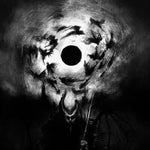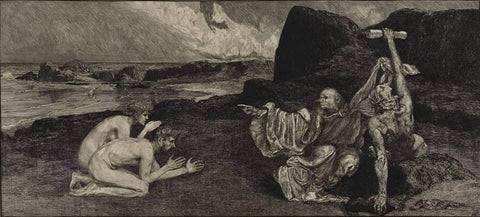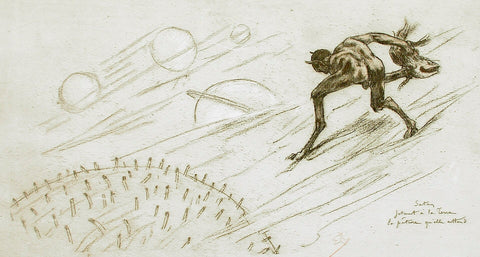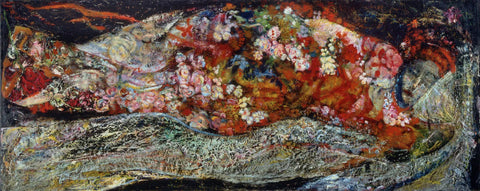

Takato Yamamoto’s figures seem to exist somewhere between the living body and the decorated corpse.
They are impossibly pale and composed, surrounded by lilies, insects, exposed bones, curling flowers and ornamental patterns. Nothing in these images is allowed to remain simply beautiful forever. Look closer and a flower becomes part of a wound, a delicate arrangement reveals a skull, or an elegant body begins to merge with something dead, animal or unnatural.
Yamamoto’s work has the precision of traditional Japanese printmaking, but the world he builds from it is erotic, morbid and deeply strange. Horror is rarely hidden in shadow. It is placed directly in front of us, carefully arranged and made beautiful enough that we want to keep looking.

Who Is Takato Yamamoto?
Takato Yamamoto was born in Akita Prefecture, Japan, in 1960. He studied painting at Tokyo Zokei University, graduating in 1983. During the early 1990s he experimented with a style he called Ukiyo-e Pop, eventually developing this approach into the visual language for which he became best known: Heisei Estheticism.
Beginning in the 1990s, Yamamoto worked extensively as an illustrator for aesthetic, fantasy, sensual and period novels as well as magazines, book covers and other commercial publications. His first major Heisei Esthetics exhibition was held at Creation Gallery G8 in Ginza in 1998.
The commercial roots of his work are still visible in his later work. His images are clean enough to function as illustrations, but they contain far more than simple narrative. Bodies become symbols. Decorative patterns become wounds. Flowers grow beside exposed bone. Figures that initially appear beautiful slowly reveal something diseased, erotic or dead beneath the surface.
Heisei Estheticism
Yamamoto’s term Heisei Estheticism describes a style that combines the visual elegance of older Japanese art with contemporary illustration, eroticism, Gothic imagery and the grotesque. The influence of ukiyo-e can be felt immediately. Figures often occupy shallow spaces. Bodies are outlined with precise contours. Hair, fabric, flowers and surrounding ornament become elaborate patterns rather than attempts at photographic realism. But Yamamoto pushes those traditions somewhere much deeper. His figures inhabit a private symbolic world populated by skeletons, insects, wounds, ghosts, vampires, religious imagery and strange biological transformations. A face may remain perfectly composed while the body beneath it is invaded by flowers or exposed bone. A beautiful youth may appear less like a living person than something preserved inside a shrine. The surface remains elegant even when the subject underneath has begun to rot.

Images via https://www.wikiart.org/en/takato-yamamoto/grotesque
Beauty and the Grotesque
One of the most interesting parts of Yamamoto’s work is the refusal to treat beauty and horror as opposites. The grotesque is not something that interrupts beauty. It is part of it. Human bodies are rendered with delicate faces, pale skin and careful proportions, then surrounded by things normally associated with disgust or fear: insects, organs, skeletons, blood and decay. Yet these elements rarely look accidental. They are arranged. Flowers curve around bones. Insects follow decorative rhythms. Blood becomes another shape within the composition. From a distance the images can appear almost luxurious. It is only after looking longer that the darker details begin to separate themselves from the ornament. That delayed recognition gives many of Yamamoto’s works their unease. You are allowed to admire the image before fully understanding what you are admiring.

Image via https://www.kaltblut-magazine.com/takato-yamamoto/
Eroticism, Death and Transformation
Eroticism runs throughout Yamamoto’s work, although it is rarely separated from mortality. Bodies touch, merge, expose themselves and transform. Desire appears beside death so frequently that the two begin to feel connected. This relationship places Yamamoto close to the Japanese tradition often described as ero guro, or erotic grotesque, where sexuality, bodily distortion, decadence and horror overlap. But his approach tends to be unusually controlled. There is little visual chaos. Even the most disturbing scenes possess balance. This control makes the work stranger. The viewer is not witnessing an explosion of violence but something closer to a ritual. Death has already been prepared. The flowers have already been arranged. The body has already taken its place in the soil.

https://www.wikiart.org/en/takato-yamamoto/grotesque via wikiart

Image via https://www.kaltblut-magazine.com/takato-yamamoto/
Vampires, Chimeras and Strange Bodies
Certain subjects return again and again throughout Yamamoto’s work. Vampires became an especially visible part of his imagery during the 2000s, including a 2008 exhibition simply titled Vampire. Other exhibitions and publications carry titles such as Altar of Narcissus, Allure of Pharmakon, Divertimento for a Martyr, Tombstone Chimera and Necrophantasmagoria. Even the titles suggest the atmosphere of the work. Religious ceremony mixes with poison, martyrdom, mutation and death. His chimeras are particularly fitting because so much of Yamamoto’s imagery depends on unstable bodies. Human beings refuse to remain completely human. They merge with animals, insects, plants, skeletons and decorative structures. Bodies become environments for other forms of life. The transformation is sometimes violent, but just as often it appears strangely peaceful. Nothing seems surprised by what is happening.

Imager via https://elliotpfeiffer.neocities.org/Yamamoto/
The Decorative Surface
Decoration plays an important role in Yamamoto’s work. Flowers, patterned fabrics, hair, jewelry and natural forms create dense surfaces that can almost distract from the subject itself. This is part of what makes the images effective. A skull surrounded by darkness is obviously a skull. A skull surrounded by flowers, ribbons, pale skin and intricate line work becomes something else. It becomes ornament. Yamamoto repeatedly uses beauty to soften the viewer’s initial reaction to disturbing imagery. Horror enters quietly through the decorative surface. Then the longer you look, the more difficult it becomes to ignore.

A Modern Dark Romanticism
Yamamoto’s work belongs comfortably beside Dark Art, but it does not depend on darkness in the usual sense. There are few empty black landscapes or monstrous figures emerging from shadows. The horror exists directly on the surface. Everything is carefully presented. That clarity gives the work an unusual relationship with the Gothic. Instead of hiding death, Yamamoto decorates it. Instead of making decay ugly, he gives it symmetry. Instead of separating erotic desire from mortality, he places both inside the same image.


Image via https://www.kaltblut-magazine.com/takato-yamamoto/
The Beautiful Corpse
Perhaps the easiest way to understand Takato Yamamoto’s work is to consider how frequently the human body becomes an object. His figures often appear frozen outside ordinary time. Their expressions remain distant even when impossible things are happening to them. They resemble saints, dolls, corpses, vampires and preserved specimens all at once. Yamamoto takes the elegance of traditional Japanese visual culture and leads it somewhere poisonous, erotic and strangely sacred.
The flowers are beautiful.
The bodies are beautiful.
Even death is beautiful.
Takato Yamamoto Official Website
https://www.yamamototakato.com/
Takato Yamamoto – Le Mette Gallery
https://www.lemettegallery.com/artist/takatoyamamoto
Takato Yamamoto – Gallery Kogure
https://gallerykogure.com/artists/takato-yamamoto/
Takato Yamamoto – Artnet
https://www.artnet.com/artists/takato-yamamoto/